

Same Design File. Two Completely Different Stamps. Here's Why.
When a customer sends us their artwork, they're trusting us to turn it into something that actually looks like what they designed. Every fine line, every tiny detail, every letter. It should all show up in the impression.
Not every stamp maker delivers on that promise. And we wanted to show you exactly why and not just tell you.
So we did something simple: we took the exact same design file and made it into two stamps. One laser-engraved. One deep-etched vulcanized rubber, made the way we've always made ours. Then we inked them both and pressed them onto paper.
The results speak for themselves.
The Side-by-Side That Says It All
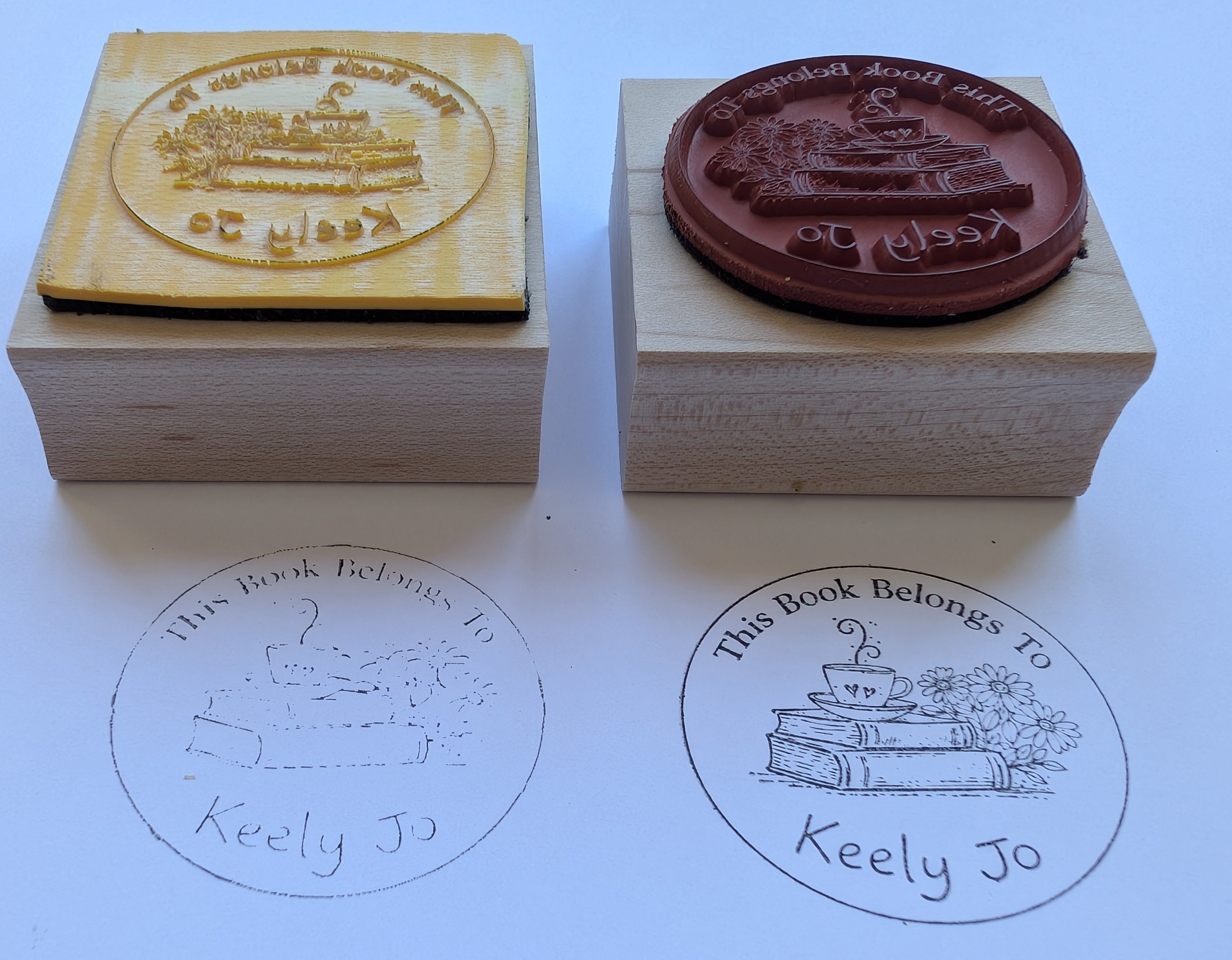
Same design. Same ink. Two very different results. Laser-engraved on the left, deep-etched vulcanized rubber on the right.
Both of these stamps were made from the exact same artwork. A "This Book Belongs To Keely Jo" design with detailed illustrations of books, flowers, and a tea cup. Same design file. Same ink color. The only difference is how they were made.
The impression on the left is what you get from a laser-engraved rubber stamp. The impression on the right is what you get from a deep-etched vulcanized rubber stamp made here at Magnuson Custom Stamps.
We'll let the photos do the talking, but also explain exactly why this happens.
Problem #1: The Detail Disappears Before Ink Even Touches It
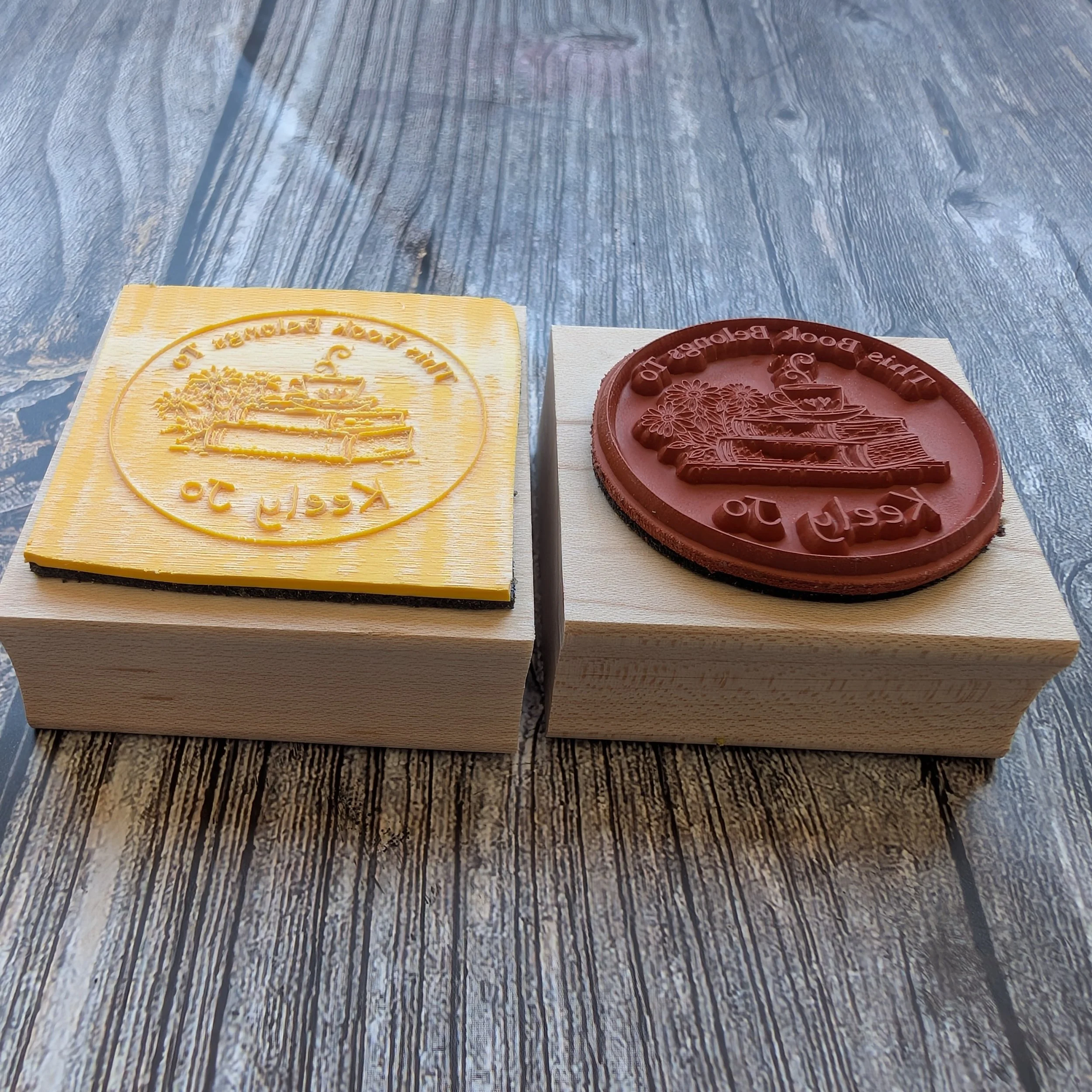
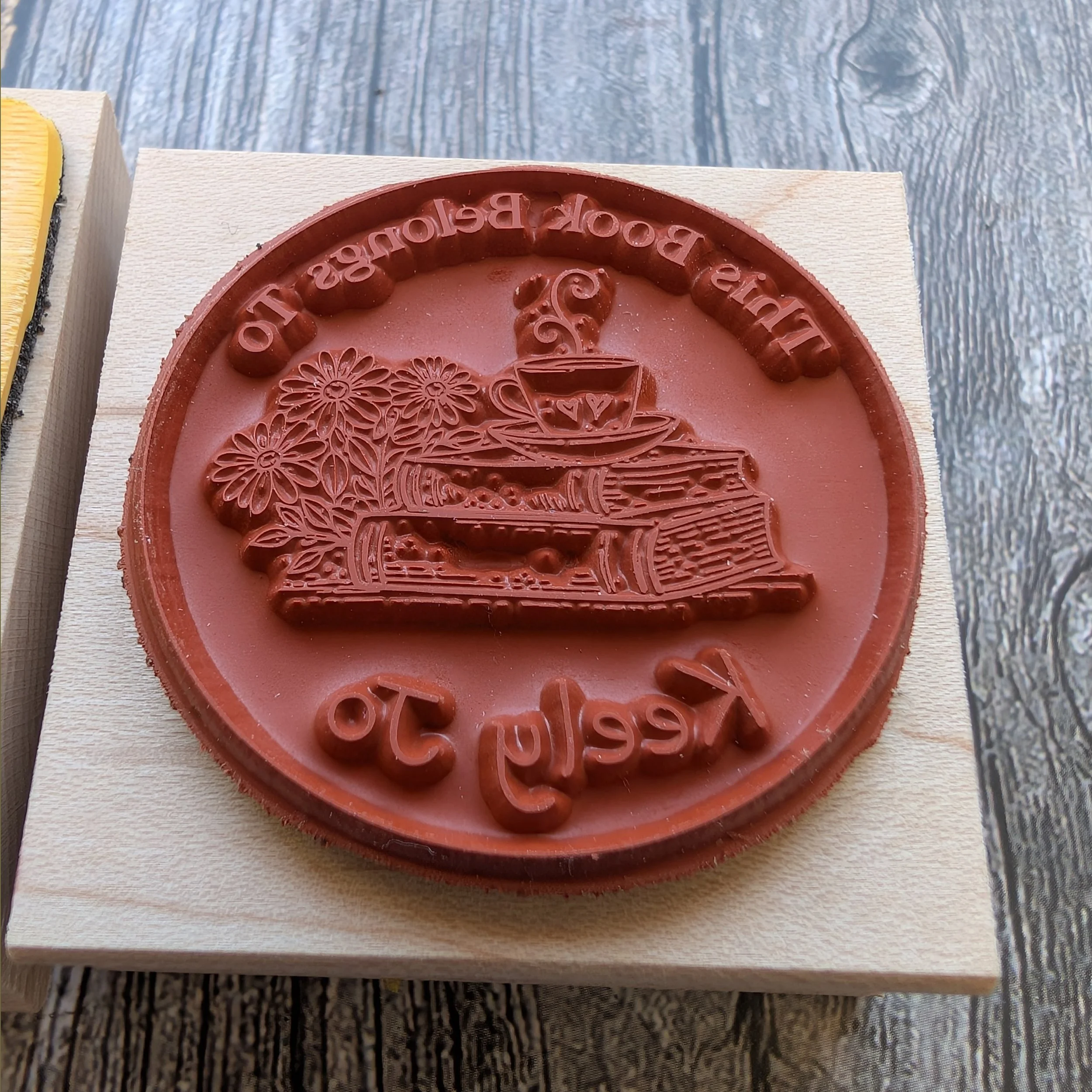
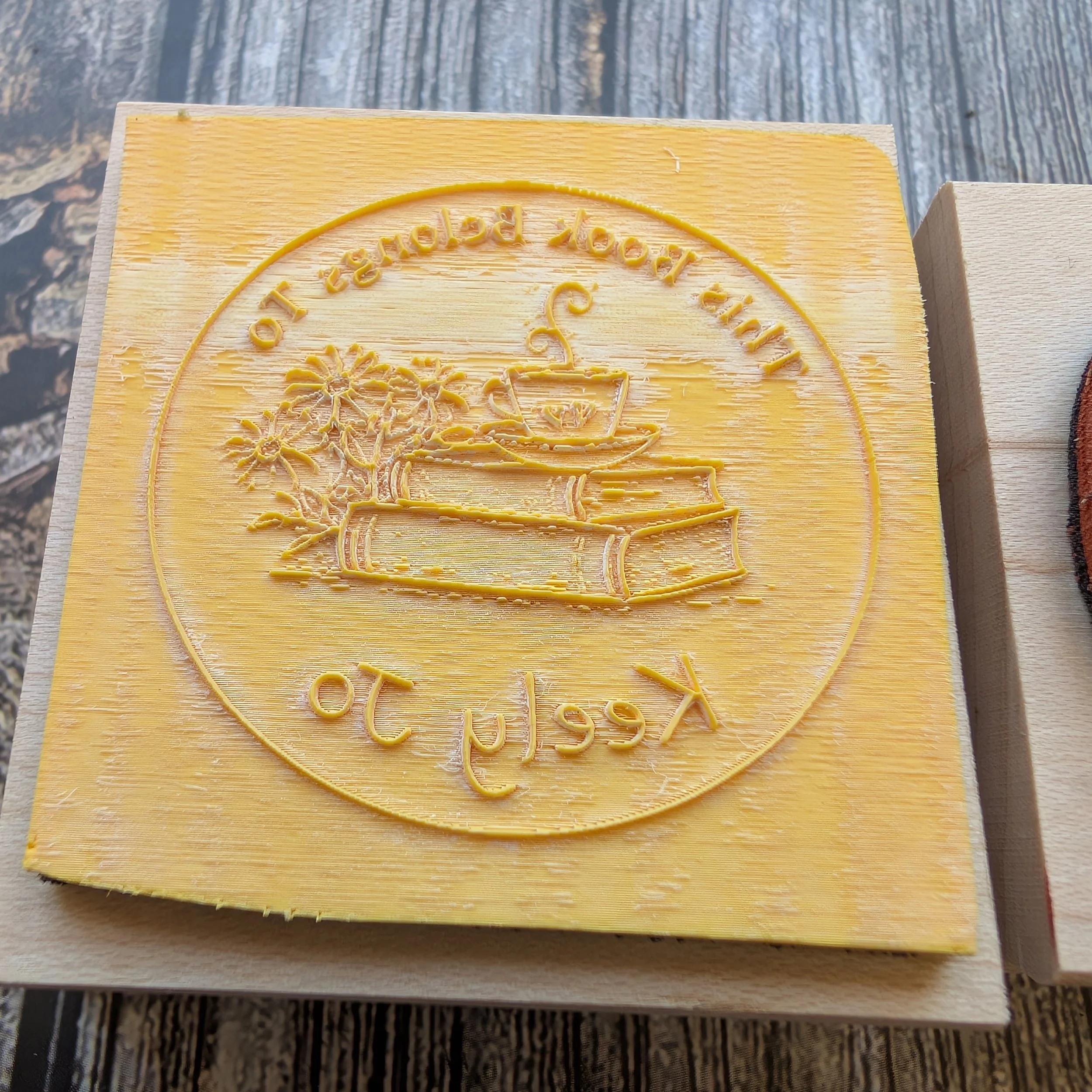
Same file. The laser-engraved stamp (left, yellow) looks mushy and indistinct even before inking. The vulcanized stamp (right, deep red) shows every detail of the original artwork, sharp and defined.
Look closely at our vulcanized stamp. Individual daisy petals. The tiny heart on the teacup. The curl of steam. Fine crosshatching on the book spines. All of it is there — because deep etching holds detail that laser engraving simply cannot.
The same design on the laser-engraved stamp. Before any ink, before any pressing — the fine details are already gone. Shallow engraving can't hold thin lines or intricate artwork.
This is the part most people don't realize: detail loss isn't just an ink problem. It starts with the rubber itself.
Laser engraving on rubber is limited in how much detail it can cut. Fine lines, delicate florals, small text, and intricate artwork require depth to survive the stamping process. Also when the relief is too shallow, those details simply don't exist on the rubber. You can't stamp what isn't there.
Look at the close-up of our vulcanized stamp. You can count the daisy petals. You can see the tiny heart detail on the teacup. That level of detail is only possible because our process — pressing rubber under heat and pressure using magnesium plate molds — creates a depth that laser engraving can't match.
Problem #2: The Background Itself Is Printing
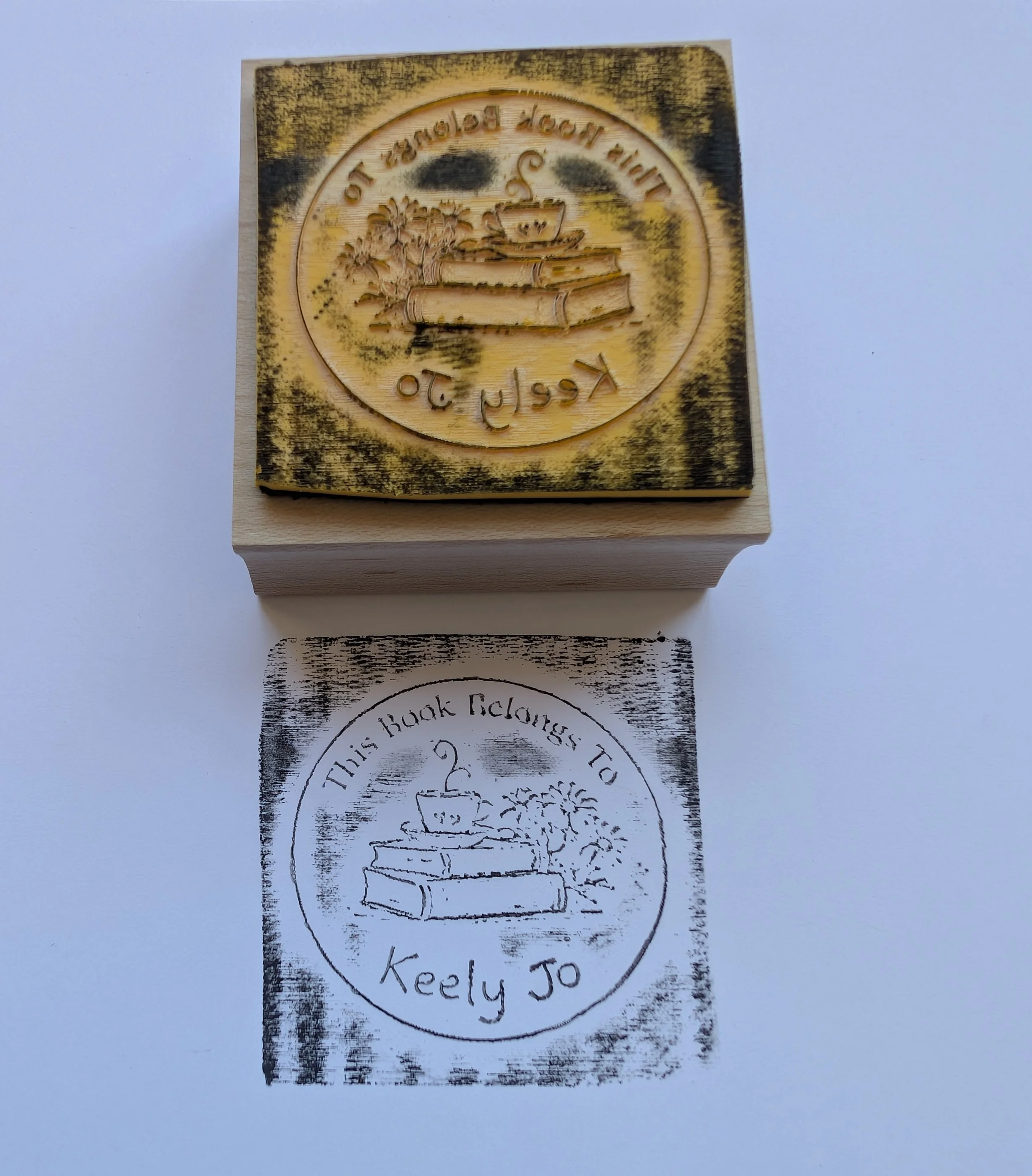
The inked laser-engraved stamp tells the whole story. The ink isn't just on the raised design — it's coating the background too, because those recessed areas are so shallow they pick up ink just like the design does. When pressed to paper, all of it transfers.
Here's what most people don't understand about why laser-engraved stamps produce muddy impressions. It's not about ink squishing sideways. It's simpler and more fundamental than that: the negative spaces — the areas that are supposed to stay blank — are so shallow that they physically touch the paper when you press down.
Think about what a stamp is supposed to do. The raised design touches the paper and transfers ink. The recessed background stays far enough away that it never makes contact. That gap is everything.
On a laser-engraved stamp, that gap barely exists. Just enough to look like a design when you hold it up to the light, but nowhere near deep enough to keep the background away from the paper. So when you press down, the background makes contact too. The ink sitting in those shallow recesses transfers right along with your design. The result is a muddy, filled-in impression where the background noise drowns out the detail.
This is why people blame their technique. They try pressing lighter. They try using less ink. They try a different ink pad. Nothing works because none of that changes the fundamental problem. If the negative space is shallow enough to touch the paper, it will print. Every time.
Why Deep Etching Solves This Completely
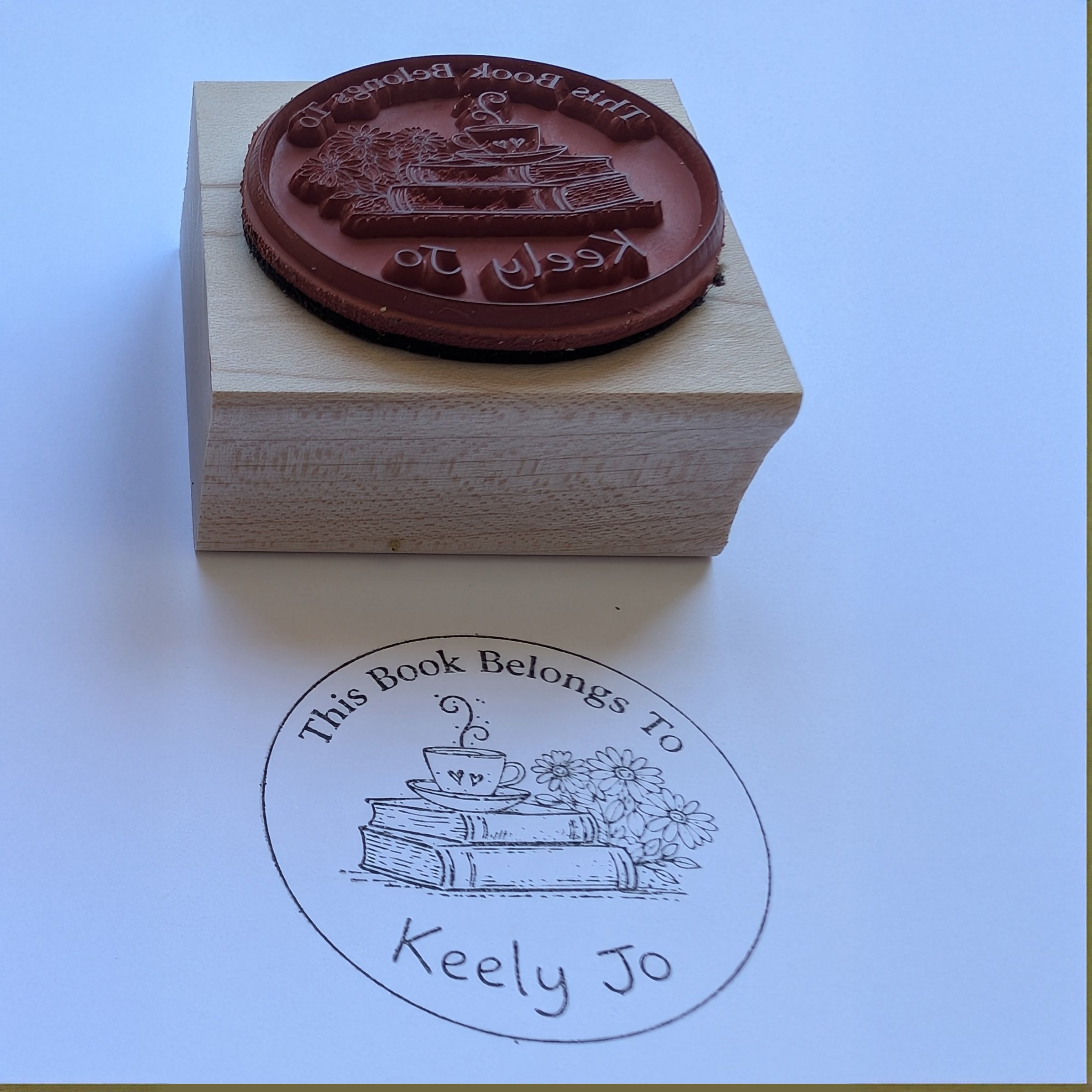
The recessed areas on our vulcanized stamp are deep and clean. When this stamp is pressed to paper, those areas physically cannot reach the surface. Only the raised design makes contact — which is exactly what you want.
Our stamps are made using vulcanized rubber pressed into a matrix board mold. The mold was made with a magnesium plate under controlled heat and pressure. It's a completely different category than laser-engraved stamps.
When you press one of our stamps to paper, the raised design makes contact and transfers ink cleanly. The background? It's recessed so deeply it never comes close to the paper. There's no fill-in. There's no background transfer. Just your design, exactly as you submitted it.
You don't need to use less ink. You don't need to press more carefully. The depth does the work for you which is how a stamp should work.
"But I've Tried Using Less Ink and Pressing Lighter"
We hear this constantly from customers who come to us after struggling with a laser-engraved stamp. The instinct makes sense. If too much is printing, use less ink, right? But it misses the actual problem. If the background rubber is shallow enough to touch the paper, it doesn't matter how light you go. It will still make contact. Still transfer. Still fill in your design.
With a properly deep-etched stamp, none of that guesswork is necessary. Press firmly. Ink it well. It still comes out clean.
The Bottom Line
Detail loss and ink bleeding aren't user error. They're both etching depth problems — and they're both solved the same way. Shallow stamps can't hold detail and can't control ink. Deep-etched stamps do both.
If your current stamp is letting you down, the stamp itself is the problem. And it's a fixable one.
Browse our custom rubber stamps →
Magnuson Custom Stamps is a family-run business in New London, Minnesota. We've made custom vulcanized rubber stamps since 2018 — for businesses, artists, potters, and makers who care about the quality of every impression they make.